All about the
Price, Plans and Availability of Starlinkin Ontario
Updated for 2026: residential plans now start at $39–$75/month, and the province's $100M subsidy deal was canceled in 2025.
All about the
Updated for 2026: residential plans now start at $39–$75/month, and the province's $100M subsidy deal was canceled in 2025.
August 25, 2026 Updated 2026 · 7 minutes to read
Jump directly to the price section of Starlink in Ontario. Residential plans now start at $39–$75/month after major price cuts.
Ontario canceled its $100M Starlink deal in mid-2025 over U.S.–Canada trade tensions.
Canada is now one of Starlink's top 5 global markets, and a new Direct-to-Cell satellite service launched with Rogers.
Starlink's benefits include coverage in rural and remote areas, fast speeds, and no long-term contracts.
Disadvantages of Starlink include the upfront cost for hardware (when not offered free) and the possible impact of weather conditions.
Starlink, the satellite internet service of SpaceX, has grown rapidly in recent years and now offers a viable alternative to traditional internet service providers, especially for rural areas or the chalet. In this article, we explore the price of Starlink in Ontario, the major changes since the article was first published in late 2024, and the now-canceled partnership with the government of Ontario.
Yes, Starlink is widely available across Ontario, from the GTA and Ottawa to remote northern communities. As a satellite Internet service provider, Starlink offers coverage in most parts of the world, including rural and remote areas of Ontario. Interested users can check Starlink availability for their specific address on the Starlink website.
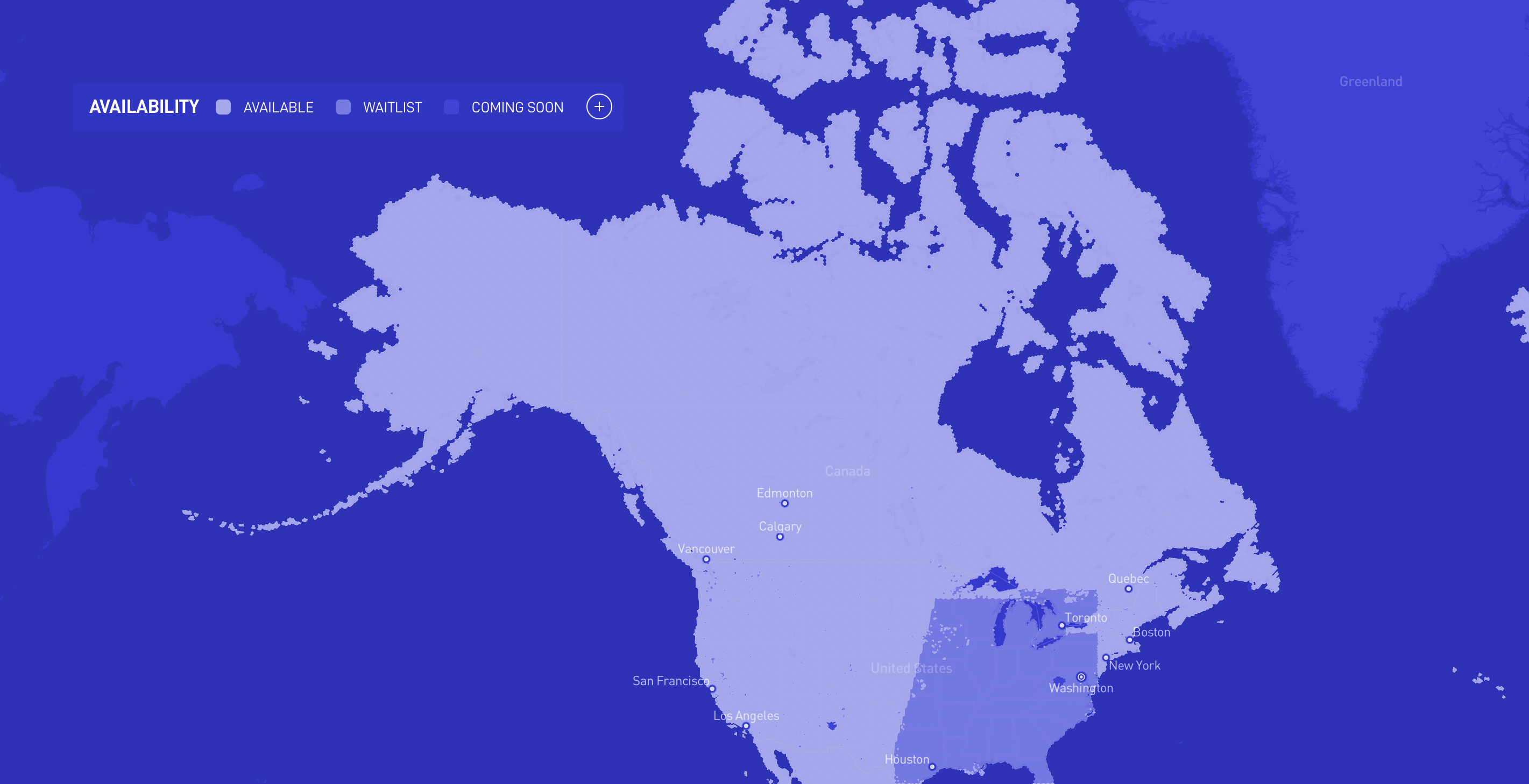
The availability of Starlink in Ontario has been good news for many residents, especially those who live in areas where internet access options are limited or non-existent. Thanks to Starlink's constellation of low-orbit satellites, Internet users can enjoy a fast and reliable connection, even in places far from urban centers. As of 2026, some high-density areas such as the GTA and Ottawa-Gatineau may show an active waitlist because of cell capacity constraints.
It should be noted that the performance of Starlink may vary depending on several factors, including geographic location and weather conditions. While coverage is generally good across Ontario, some areas may experience connection issues or slightly lower speeds than advertised.
By early 2026, median download speeds in Canada reached about 111 Mbps with uploads around 17 Mbps, making Starlink one of the fastest options available in rural and remote areas. For more information on available Starlink hardware options and their performance differences, please refer to the pricing section of this article.
The price of Starlink in Ontario consists of two main elements:
Since late 2025, Starlink has frequently bundled its hardware at no upfront cost in select areas (and offered free hardware during 2026 promotions), so the upfront cost is often $0. When hardware is purchased or sold separately, the kit includes:
| Type of material | Price (CAD) |
|---|---|
| Standard kit (Gen 3) | Free in select areas ($0 upfront promo) · otherwise from ~$199 |
| Starlink Mini | Free with the Max plan (worth ~$399) |
| High performance | ~$3,170 |
| Shipping and handling charges | Usually free for Standard, varies for High Performance |
| Shipping time | 1 to 2 weeks |
| Prices as of 2026 | Hardware promotions change frequently — always confirm the price for your address on the Starlink website. |
*May 2026 promo: New-customer offer dropped the entry price to $39/month for 100 Mbps for the first three months, with $0 upfront hardware.
*April 2026 promo: Select areas saw $49/month for 100 Mbps for four months.
*January 2026 price overhaul: Residential plans were restructured into three speed tiers starting at $70/month (later adjusted to $75).
*Partnership with SpaceX: November 14, 2024, the Ontario government announced a plan to provide high-speed satellite internet to 15,000 eligible homes and businesses in rural, remote, and northern communities. The deal was canceled in July 2025.
*Hardware Price Drop: In July 2024, Starlink reduced the price of standard hardware for consumers from $599 to $199 CAD and waived the shipping.
*Rural Hardware Discount: This promotion ended on September 30, 2023.
*Discounted Hardware Bundle: This promotion offered a $499 CAD bundle of Starlink hardware and was valid until January 5, 2024.
Starlink hardware comes in two options: Standard and High Performance.
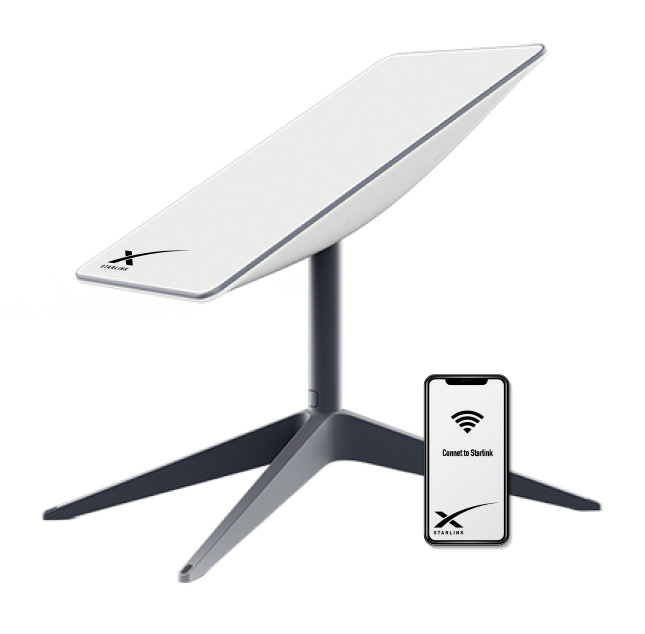
Standard Option is ideal for residential users and everyday Internet applications. The Starlink Kit includes everything you need to get online in minutes.
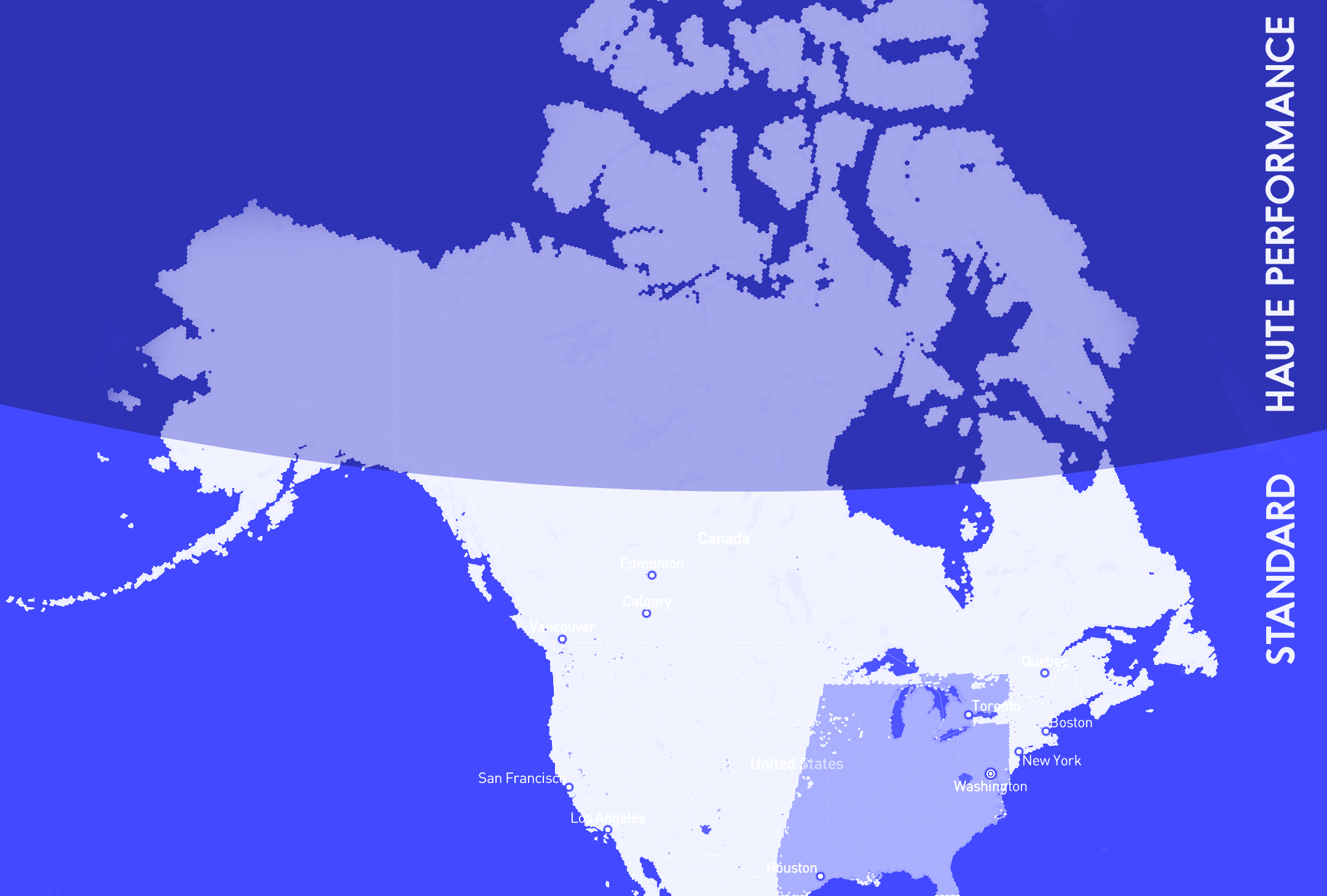
High Performance Option is designed for demanding users, professional applications and users located in polar regions (latitudes above 60 degrees). It provides better speeds at high temperatures, connects to more satellites, and is more resilient to extreme environments. See the map below to identify the territories concerned.
Starlink completely overhauled its Canadian pricing starting in late 2025 and into 2026, cutting residential rates to as low as $39–$75/month and making it far more competitive with terrestrial ISPs. Here is a summary of the main plan tiers available in Ontario:
| Plan | Typical price | Best for |
|---|---|---|
| Residential 100 Mbps | $75/month ($70 at launch; $39–$49 during promos) | Permanent rural homes |
| Residential 200 Mbps | $115/month ($110 at launch) | Homes with heavier usage |
| Residential Max (400+ Mbps) | $150/month ($140 at launch) — includes a free Starlink Mini | Demanding households |
| Roam 100 GB | $75/month; can pause with $15/month Standby | Cottages and seasonal use |
| Roam Unlimited | $200/month | RV and mobile users |
| Global Roam | $540/month | International travel |
Prices vary by region, promotion, and plan tier, so always confirm the exact rate for your address on the Starlink website. There is no long-term contract, and a 30-day trial applies.
Between Starlink and other technologies available in Ontario
Starlink is an increasingly popular option for Ontarians looking for a fast and reliable connection. To help you better understand how it compares to other technologies, here is an overview of speeds and latency.
| Technology | Download Speed | Upload speed | Latency |
|---|---|---|---|
| Starlink | 50-150Mbps | 20-40Mbps | 20-40ms |
| Optical fiber | up to 1 Gbps or more | up to 1 Gbps or more | <1-5ms |
| Cable | 100-500Mbps | 10-50Mbps | 10-20ms |
| ADSL | 5-50Mbps | 0.5-10Mbps | 20-70ms |
This table summarizes the download and upload speeds as well as the latency for the different internet technologies available in Ontario. Starlink offers impressive speeds and relatively low latency compared to other options.
On November 14, 2024, the Ontario government announced a partnership with SpaceX's Starlink to provide high-speed satellite internet access to 15,000 eligible homes and businesses in rural, remote, and northern communities. This initiative was part of the Ontario Satellite Internet (ONSAT) program, which aimed to enhance internet connectivity where traditional services are lacking.
However, this deal was terminated in July 2025:
It is essential to weigh the pros and cons of Starlink before making a decision. Here are some things to consider:
| Advantages | Disadvantages |
|---|---|
| Coverage in rural and remote areas | Upfront hardware cost when no promotion applies |
| Fast download and upload speeds | Speeds can vary by location and weather |
| No long term contract | May be affected by weather conditions |
| Easy setup and configuration | Some high-density areas may have a waitlist |
Direct to Cell is Starlink's service that lets standard smartphones connect directly to Starlink satellites in areas without cell coverage. It went commercial in late 2024 and expanded through 2025–2026.
In Canada, Rogers partnered with Starlink to offer this as "Rogers Satellite":
By early 2026, Canada ranked among Starlink's top 5 markets globally (alongside the U.S., Mexico, Indonesia, and Brazil).
If you're evaluating Starlink for a specific Ontario location (for example a rural property, cottage, or business), check current availability and the most cost-effective plan for your usage pattern on the Starlink website.
Ontario is well known for its intense weather conditions, with harsh winters and heavy snowfall. You need to understand how Ontario weather can affect Starlink's performance and reliability.
Snow and ice can sometimes accumulate on the Starlink satellite dish, which can temporarily degrade the connection. However, the Starlink antenna is designed to automatically heat up and melt any snow or ice that may accumulate there. This feature helps minimize service interruptions due to winter precipitation.
Strong winds and thunderstorms can also affect Starlink's performance. The antennas are designed to withstand winds of up to 180 km/h, but extremely high winds could potentially cause problems. However, this should be a rare and isolated issue. Thunderstorms, on the other hand, can cause temporary interference in the connection, but these disturbances should be short-lived.
Starlink equipment is designed to operate in a variety of climatic conditions, including extremely cold or hot temperatures. High Performance hardware is particularly suitable for harsh environments and can perform better in extreme weather conditions.
In conclusion, although the intense weather in Ontario can have an impact on the performance of Starlink, the system is designed to cope with these conditions and offer a reliable and fast internet connection. Users located in regions with particularly harsh weather conditions might consider the High Performance option for better resiliency and optimal performance.

Mobo Telecom is a Canadian rural internet plan provider and mobile network operator. It is the largest fixed and rural wireless broadband service provider in the country. Its head office is located in Laval, Quebec.
4.7/5 out of 345 reviews